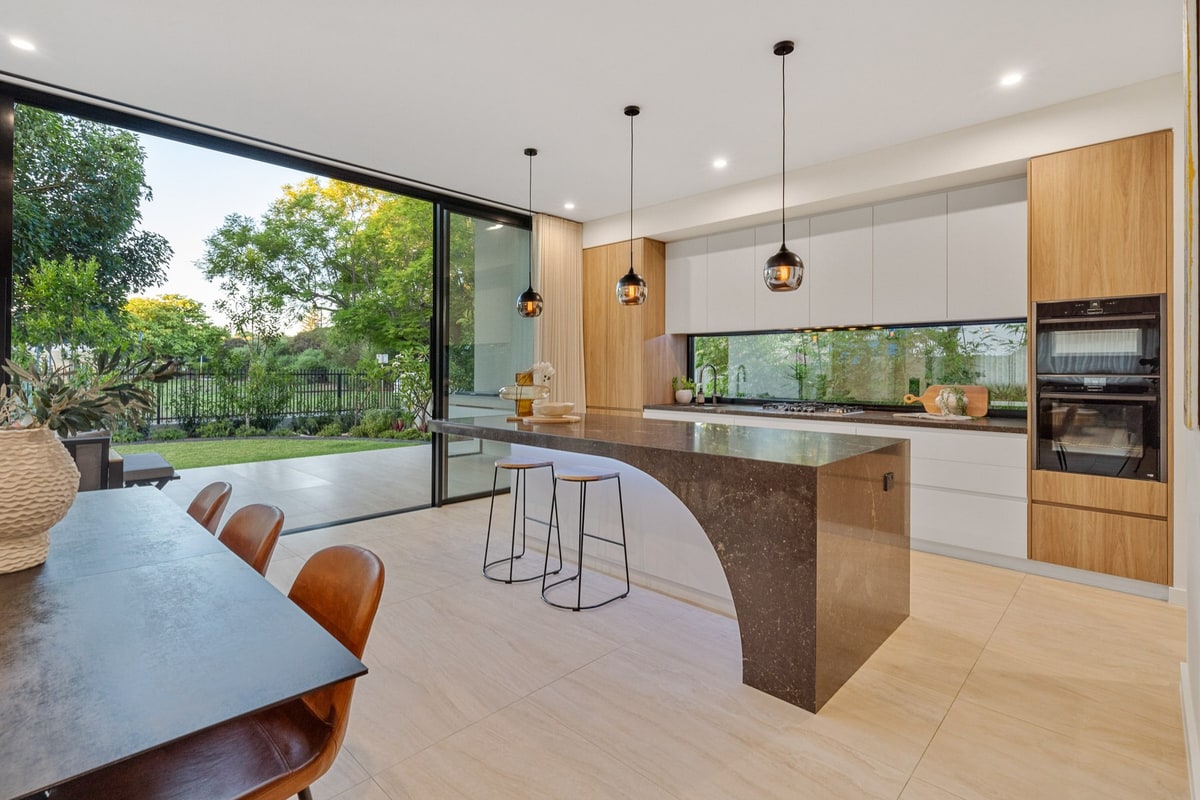
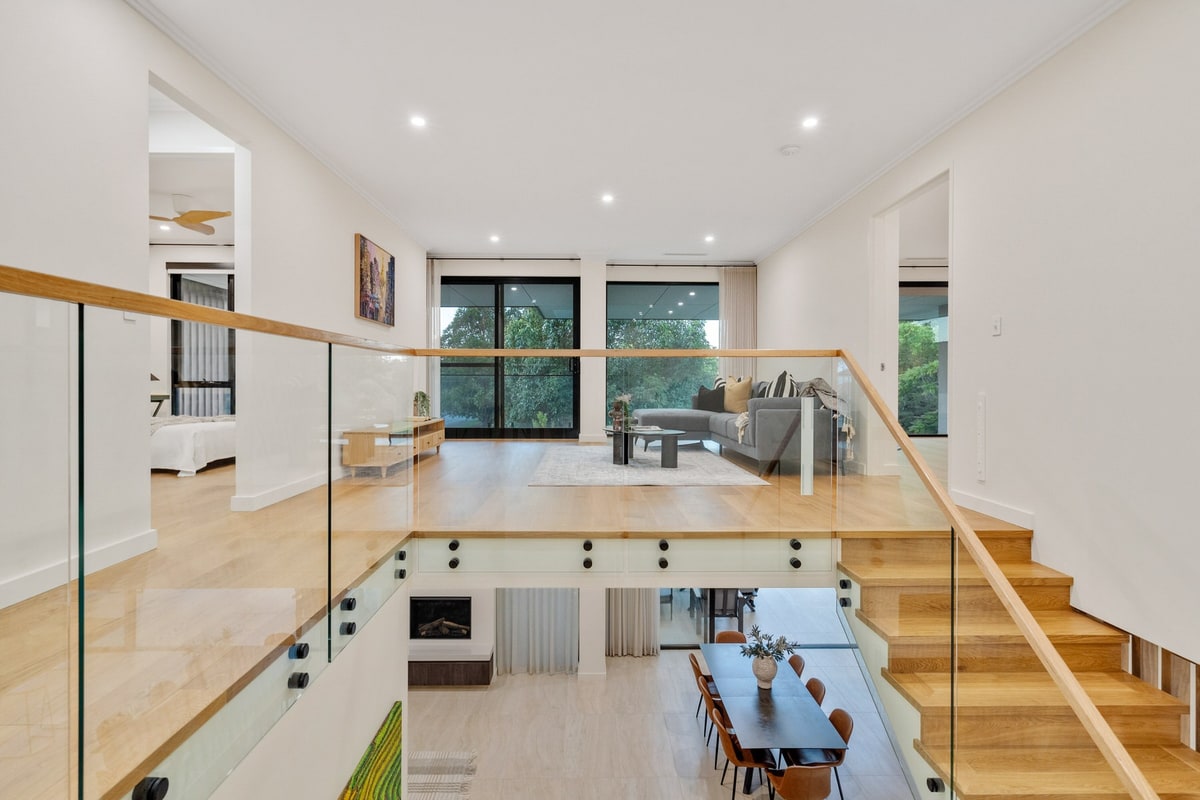
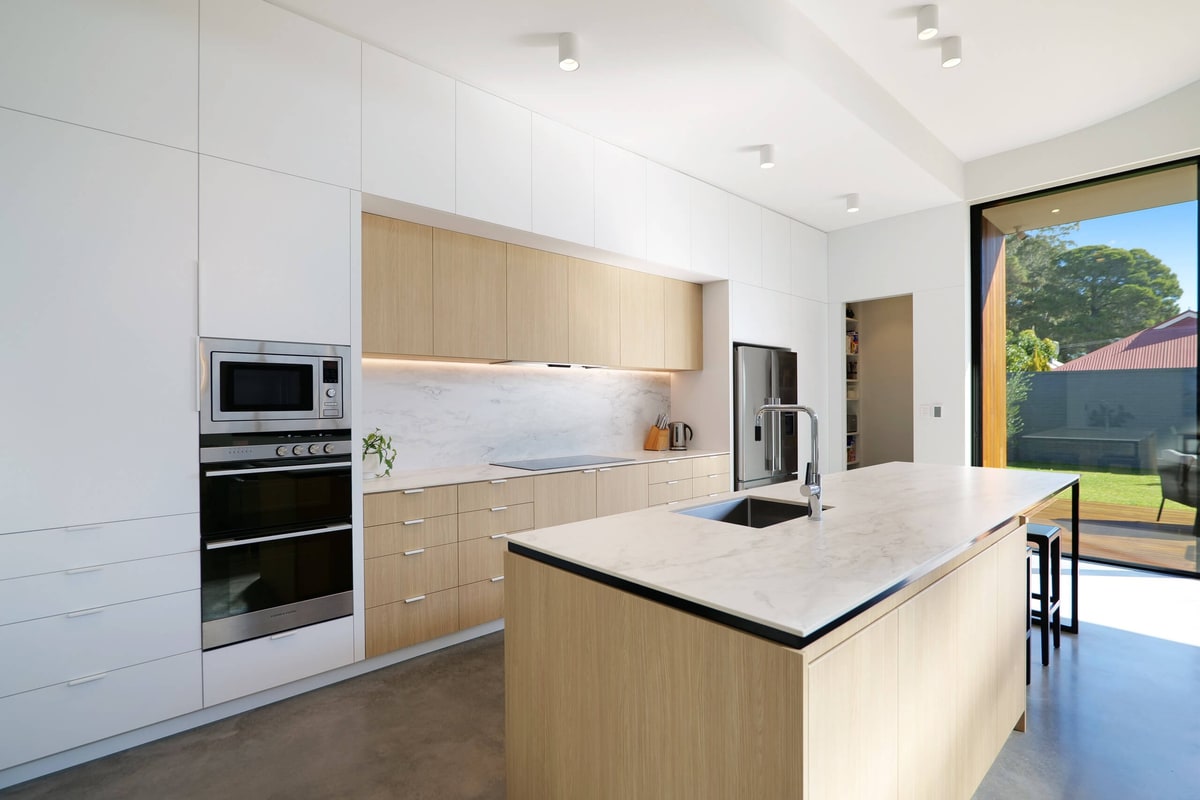
You walk into the house on a 38-degree afternoon. There is no blast of cold air from an air conditioning unit. The house is simply comfortable. The air feels still and cool. The concrete floor is slightly cool underfoot. The light is even, filtered through high-performance glazing. It takes a moment to register what is missing: noise. No compressor humming. No fan running. The house is quiet.
That experience, the absence of effort, is what a 9-star NatHERS rated home feels like from the inside. The numbers on the energy certificate translate into something you notice the moment you step through the front door. But the full picture takes longer to unfold. It reveals itself over weeks and months, through a Perth summer, through the first electricity bill, through the first night you sleep with every window closed and wake up comfortable without air conditioning.
This article describes what that experience is actually like, drawn from the daily reality of living in a high-performing home in Perth's climate.
The first summer
Every homeowner who moves into a high-performance home carries the same assumption: they will still need air conditioning. Perth summers are long and hot. Weeks of consecutive days above 35 degrees are normal. The idea that a house can stay comfortable through that without mechanical cooling sounds theoretical, something that works on paper but not in practice.
We kept waiting for the moment we would need to turn the air conditioning on. It was late January before we touched it, and even then it was more out of habit than necessity. By the second summer we had stopped thinking about it entirely.
The concrete difference is measurable. In a standard double-brick Perth home, the indoor temperature on a 38-degree day typically climbs to 28 or 29 degrees by mid-afternoon, even with curtains drawn and blinds closed. The air conditioning comes on by mid-morning and runs until well after dark. In a 9-star home, the indoor temperature holds between 22 and 25 degrees through the same day. The difference is not marginal. It is the difference between a home you endure and a home you enjoy.
The evening is where the contrast becomes most apparent. In a conventional double-brick home, the walls absorb heat all day and radiate it back into the living spaces through the evening. At 10 pm, the house is still warm. The air conditioning runs through the night, or you sleep restlessly. In a 9-star home with properly placed thermal mass and continuous external insulation, the walls do not store unwanted heat. The evening is comfortable. The house cools naturally as the outside temperature drops.
There is no need to close blinds and curtains by 10 am to keep the heat out. The glazing specification and eave design handle solar control passively. North-facing windows admit winter sun for warmth but are shaded by eaves during summer when the sun is high. West-facing glazing, the most problematic orientation in Perth, is either minimised or specified with high-performance glass that rejects heat gain without blocking light.
The Fremantle Doctor, Perth's reliable afternoon sea breeze, becomes an asset rather than an afterthought. In a home designed around passive solar principles, the ventilation strategy captures the southwest breeze through carefully positioned operable windows. Cross-ventilation pulls cool air through the home in the late afternoon and evening. The breeze does what it is supposed to do, instead of just pushing hot air from one room to another.
What the energy bills actually look like
The comfort comes first. The financial confirmation arrives a few months later, when the first full summer electricity bill lands.
The numbers speak for themselves. Under the NatHERS star bands for Perth, a 7-star home is allowed up to 52 MJ/m²/yr of heating and cooling energy. A 9-star home is allowed 17. That is two thirds less energy needed to hold the same comfort, every year, and the gap widens in value as electricity prices continue to rise.
Our previous house was a 1990s double brick. We were paying close to $900 a quarter just in summer cooling. The first full quarter here was under $200. I genuinely thought there was an error on the bill.
The savings are real, but they are also the least interesting part of the story. Most people who move into a 9-star home stop thinking about their energy bills entirely. The bill is low enough to be unremarkable, and that is the point. The home pays you back in comfort first, then in dollars. The comfort is what you notice every day. The savings are what you notice every quarter.
For a detailed breakdown of the cost to build a high-performing home and the long-term running cost comparison, see our article on the real cost of building an energy-efficient home in Perth.
The things nobody tells you
The star rating and the energy bills are the measurable outcomes. But the things that make the most difference to daily life are often the ones that do not appear on any certificate.
Quiet
High-performance glazing and continuous insulation create a remarkably quiet indoor environment. Double-glazed windows with thermally broken frames and proper seals block sound as effectively as they block heat transfer. Street noise drops. Neighbour noise drops. If you live under a flight path, aircraft noise is reduced to a low murmur rather than a conversation-stopping interruption.
We live on a reasonably busy road. In our old house you could hear every truck. Here, I sometimes forget we are on that road at all. People comment on it when they visit for the first time.
The quiet is compounded by the absence of mechanical noise. When the air conditioning is not running, and in a 9-star home it is not running most of the time, the house is genuinely silent. No compressor cycling on and off. No fan noise in the background. You do not realise how much ambient mechanical noise you have been living with until it is gone.
Consistent temperature between rooms
In a standard home, every room is a different temperature. The bedroom is warmer than the living room. The upstairs is hotter than the downstairs. The bathroom is cold in winter. You move from room to room adjusting, adapting, seeking comfort.
In a 9-star home, the temperature is consistent throughout. The bedroom is the same temperature as the kitchen. The upstairs is the same as the downstairs. This consistency comes from the continuous insulation envelope, the absence of thermal bridges and the even distribution of thermal mass. You stop thinking about which room is comfortable because they all are.
No condensation
Condensation on windows and walls is a common problem in Perth homes, particularly during the cooler months when humidity rises. It leads to mould, musty smells and ongoing maintenance. The cause is simple: when warm, moist indoor air meets a cold surface, moisture condenses.
In a well-insulated home with no thermal bridges, interior surfaces stay close to the ambient indoor temperature. There are no cold spots for moisture to condense on. The window frames are thermally broken, so even the glass stays warm enough to prevent condensation under normal conditions. The mould problem that affects so many Perth homes simply does not occur.
The house recovers fast
One concern people raise about sealed, insulated homes is what happens when you open everything up. If you open all the doors and windows on a summer evening to enjoy the breeze, does the house take hours to recover?
The answer is no. A 9-star home returns to a comfortable temperature quickly once you close up. The thermal mass absorbs the brief heat load and stabilises the indoor temperature within an hour or two. The insulation envelope prevents ongoing heat gain from outside. The house has enough thermal inertia to handle a brief opening without losing its equilibrium. This means you can enjoy natural ventilation when conditions are right without committing to an uncomfortable night.
A day in a 9-star home
To make the experience concrete, here is what a typical 38-degree Perth summer day looks like inside a 9-star home.
- 6 am. You wake up. The house is 22 degrees. No air conditioning has run overnight. The thermal mass absorbed excess heat during the previous day and released it slowly through the cooler night. The bedroom is the same temperature as the hallway. The air is still and fresh.
- 10 am. The outside temperature is climbing past 30 degrees. Inside, the house sits at 23 degrees. North-facing eaves block the high summer sun from entering through the living area glazing. The light inside is even and comfortable without blinds or curtains drawn.
- 2 pm. Peak heat outside. The Bureau says 38 degrees. Inside, the temperature has risen to 24 degrees. Still comfortable. No air conditioning running. The insulation envelope and thermal mass are doing what they were designed to do: slowing the transfer of heat from outside to inside.
- 5 pm. The Fremantle Doctor arrives. You open the windows designed to capture the southwest breeze. Cross-ventilation pulls cool air through the house. The indoor temperature begins to drop.
- 8 pm. Outside is still 28 degrees. Inside, the house is 24 degrees and cooling. The walls are not radiating stored heat back into the room. The evening is comfortable. You are sitting outside or inside, your choice, with no air conditioning running.
Compare that to a standard double-brick home on the same day. The air conditioning comes on by 10 am. It runs continuously through the afternoon. By evening, the brick walls are saturated with heat and begin radiating it into the rooms. At 10 pm, the house is still warm. The air conditioning runs through the night, cycling on and off, and you wake up to an electricity bill that reflects it.
The difference is not subtle. It is a fundamentally different way of living through a Perth summer.
Curious about what this level of comfort would feel like in your own home? Start a conversation with us.
Start your design conversationWhat the architect sees
From the outside, a 9-star home does not look dramatically different from any other well-designed house. The high performance is embedded in the design decisions, not bolted on as visible upgrades. But every detail serves a purpose.
Every high-performing home starts with the same question: how does the sun move across this block? Everything else follows from that. The orientation sets the foundation, and then we layer in the thermal mass, the insulation continuity, the glazing specification and the ventilation strategy. None of those elements work in isolation. They work as a system.
Achieving a 9-star NatHERS rating is not about a single technology or a single material choice. It is the integration of orientation, thermal mass placement, insulation continuity, glazing specification and ventilation design. Each element supports the others. Get the orientation wrong and no amount of insulation will compensate. Specify high-performance glazing but leave thermal bridges in the wall assembly and the heat finds its way in regardless.
This is why the design process matters as much as the construction. The performance of a 9-star home is determined in the first weeks of design, when the relationship between the building and its site is established. By the time construction begins, the performance is already locked in.
The best-performing homes are often the simplest. We are not adding complexity. We are using the climate, the sun, the breeze, the thermal mass, as the primary systems. The mechanical systems become backup, not primary. That is the real shift in how you think about building.
Is 9 stars worth it?
The cost question is inevitable, and it deserves a direct answer. Yes, there is a cost premium to build a 9-star home compared to a home that meets the minimum 7-star code requirement. The premium covers higher-specification glazing, continuous insulation detailing, thermally broken frames and more careful design work during the planning phase.
The payback period is shorter than most people expect. The annual energy savings are meaningful, because the building needs roughly two thirds less heating and cooling than a 7-star home of similar size. Over a decade, that adds up. Over the life of the home, it more than covers the initial premium. For a detailed cost breakdown and 10-year comparison, see the real cost of building an energy-efficient home in Perth.
But the cost-benefit calculation misses the point. Comfort is not something you feel in a spreadsheet. You feel it every morning when you wake up in a home that held its temperature overnight. You feel it every evening when you sit down without the background hum of an air conditioner. You feel it every summer when you do not dread the electricity bill. The financial return is real, but it is secondary to the daily experience of living in a home that simply works.
Frequently asked questions
Do 9-star homes need air conditioning at all?
Most of our 9-star homes have air conditioning installed, and we recommend it. Perth does experience extreme heat days above 40 degrees, and having the option provides peace of mind. The difference is frequency: where a 7-star home might run air conditioning for 8 to 10 hours on a hot day, a 9-star home might use it for 1 to 2 hours, or not at all. Many of our homeowners report going weeks without turning it on.
Can I still open the windows?
Yes. Passive solar homes are designed around natural ventilation. Opening windows to capture the Fremantle Doctor is part of how the home works. The difference between passive solar and Passiv Haus is exactly this: passive solar design integrates natural airflow as a core strategy, while Passiv Haus relies on mechanical ventilation with heat recovery. Norde Homes designs for passive solar principles suited to Perth's climate.
What star rating do Norde homes typically achieve?
Our completed projects consistently achieve between 8 and 10 star NatHERS ratings. Woodlands achieved 10 stars. Hazelmere achieved 9.1 stars. Palmyra achieved 8.4 stars on a constrained block with a difficult orientation. These are assessed ratings, not projections. You can see specifications for each project on our projects page.
How long does it take to notice the difference?
Most homeowners notice immediately. The first night sleeping in a home that maintains a comfortable temperature without air conditioning is the moment it clicks. The energy bill confirmation comes a few months later. The longer-term realisation, that you have stopped thinking about heating, cooling and energy use entirely, takes a season or two.