A Perth summer is a real test of a house. Long runs of days above 35 degrees, and sometimes weeks where it barely drops below 40 in the afternoon. Most homes here answer that with air conditioning running for hours a day, and the power bills that come with it. A well-designed home answers it differently: it is built to stay cool on its own, and keeps the air conditioner as a backup rather than the main event.
That is passive cooling. It is the summer half of passive solar design, and it comes down to four things working together: keeping the sun off the house, keeping the heat out, storing what does get in, and flushing it out overnight. None of them is complicated on its own. The performance comes from getting all four right at the same time.
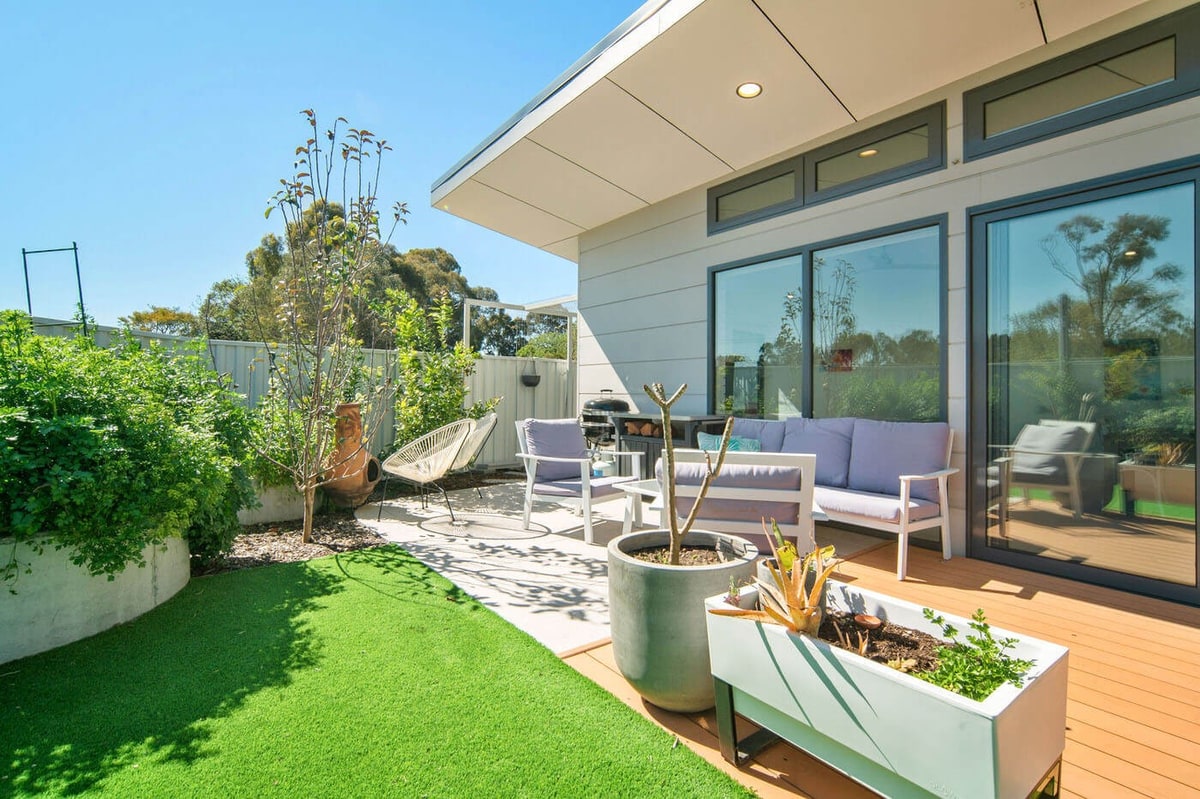
Keep the summer sun off the glass
The single biggest source of unwanted summer heat is sunlight coming straight through windows. Once it is inside, it is trapped, so the best place to stop it is before it hits the glass at all.
The good news in Perth is that the summer sun is high overhead, while the winter sun is low. That difference lets a well-sized eave or shading device do something clever: block the high summer sun off north-facing glass, while still letting the low winter sun in when you want it. Get the orientation right and the shading follows naturally.
East and west windows are the harder problem, because morning and afternoon sun comes in low and flat where an eave cannot block it. That is why passive cooling favours limiting west-facing glass in particular, and using deeper shading, screening or planting where it cannot be avoided. West-facing glass in a Perth summer is the fastest way to overheat a room.
Keep the heat out of the fabric
Shading handles the sun coming through the glass. Insulation handles the heat trying to push through the walls and roof. On a 40 degree day the roof is the hottest surface on the house, so a well-insulated ceiling is the priority, followed by walls that keep the heat outside where it belongs.
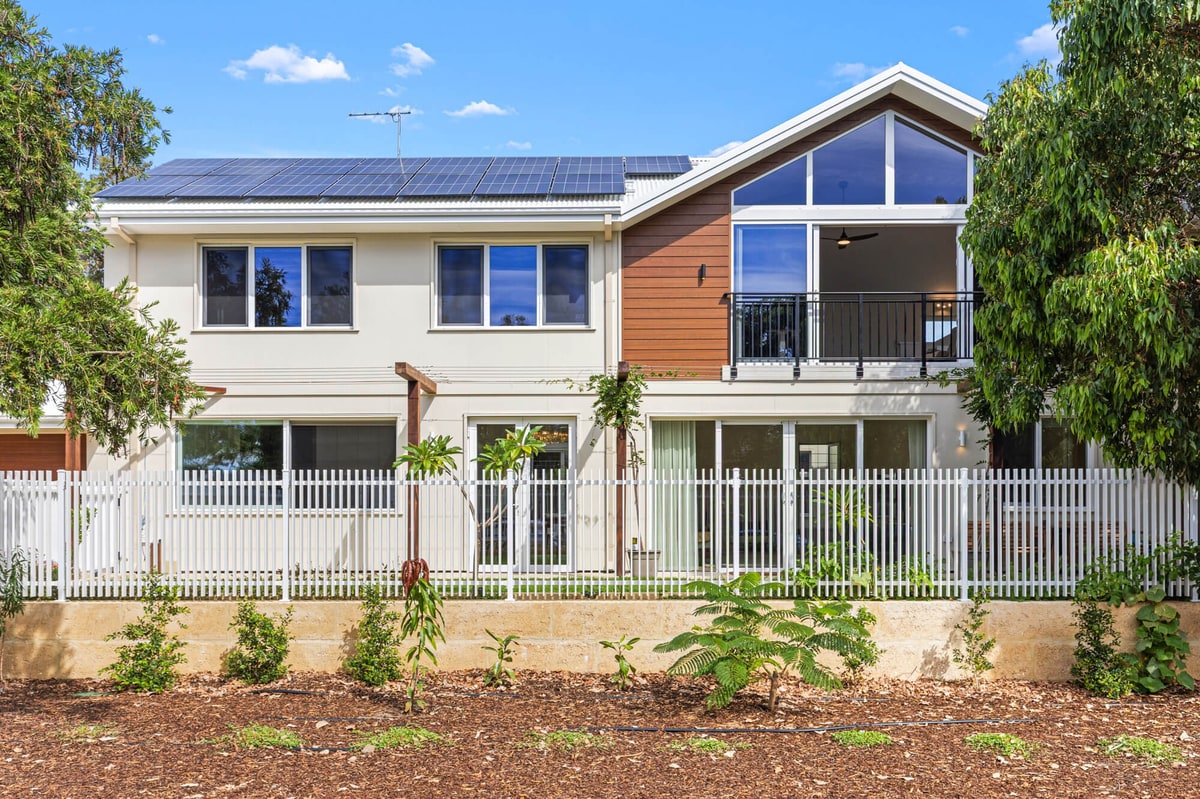
This is where the construction method matters. Reverse brick veneer puts continuous insulation on the outside of the wall, so the heat is stopped before it reaches the interior. It is a large part of why homes built this way stay comfortable through a heatwave while the air conditioner barely runs.
Want a home that stays cool through a Perth summer on its own? Start a conversation and we will show you how the design comes together.
Start your design conversationUse thermal mass to steady the temperature
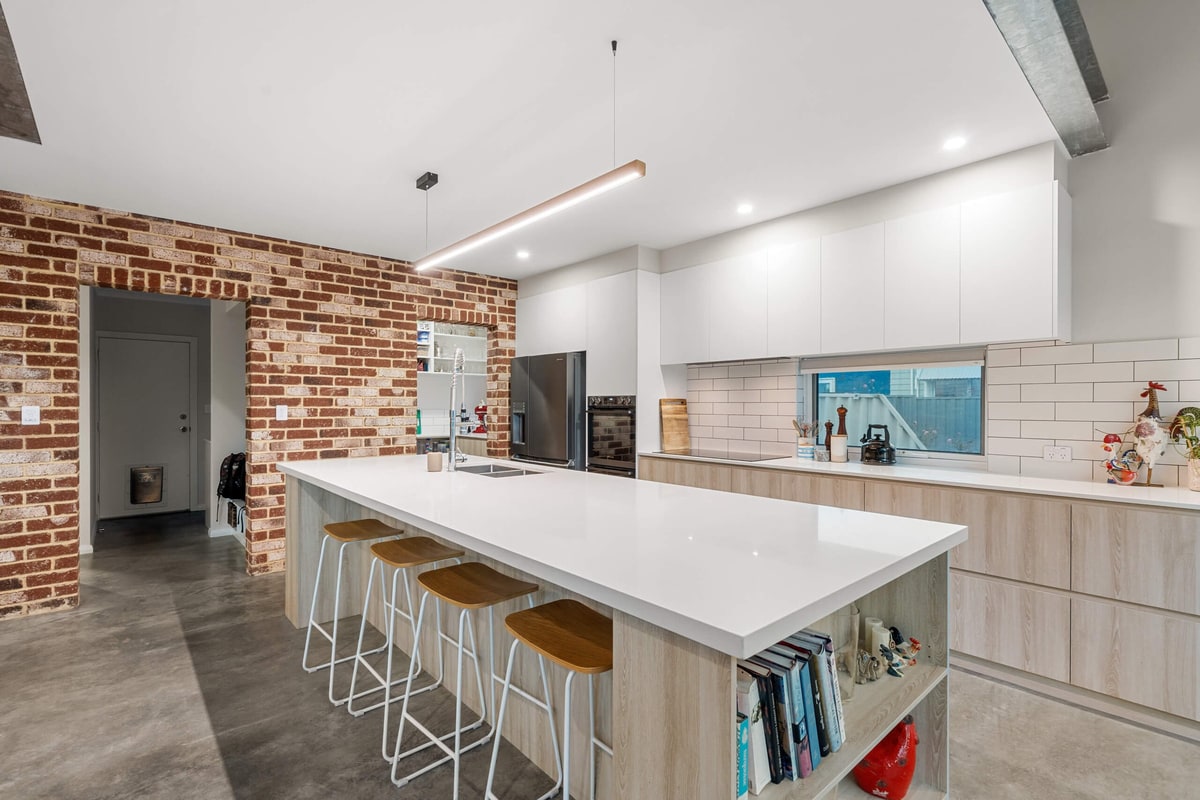
Even with good shading and insulation, some heat gets in over a long hot day. Thermal mass is what stops that heat from turning into an uncomfortable room. A heavy internal material like brick absorbs warmth slowly, so instead of the air temperature spiking in the afternoon, the mass soaks it up and the room stays steady.
Mass on its own is not cooling; it is a buffer. It flattens the peak of the day and holds the temperature until the evening, when you can get rid of the stored heat. That is the job the internal brick does in a reverse brick veneer home, and it is why passive cooling and thermal mass are talked about together.
Flush the heat out overnight
Perth has one big advantage over more humid climates: the nights cool down, and the afternoon sea breeze, the Fremantle Doctor, is reliable through summer. Passive cooling uses both.
As the outside temperature drops in the evening, you open the house up and let the cooler air move through. Windows and openings positioned to catch the breeze and let warm air escape on the other side pull the day's heat back out of the rooms and out of the thermal mass, resetting the house for the next day. Done well, you wake up to a cool home that is ready to ride out another hot day. This is why window placement is a cooling decision as much as a light or view decision.
What it adds up to
Put shading, insulation, thermal mass and night ventilation together and you get a home that stays comfortable through a Perth summer with very little mechanical cooling. Homes designed this way reach 9 to 10 star NatHERS ratings and run at a fraction of the cooling cost of a standard build. The air conditioner is still there for the worst few days, but it is the exception, not the routine, which is a large part of the low running costs we cover in our guide to what an energy-efficient home costs.
You can read our overview of passive solar design, understand why orientation comes first, or get in touch to talk through your project.
Frequently asked questions
For most of the summer, yes. With good shading, insulation, thermal mass and night ventilation, a passive solar home stays comfortable through typical Perth heat with little or no mechanical cooling. Air conditioning is still worth installing for the handful of extreme days each year, but in a well-designed home it is a backup that runs occasionally, not a system running for hours every day.
Keeping the sun off the glass. Direct sunlight through windows is the largest source of unwanted summer heat, and once it is inside it is trapped. Correct orientation with well-sized eaves, plus limiting and shading west-facing glass, does more for summer comfort than almost anything else. It works because Perth's summer sun is high and the winter sun is low, so shading can block one without blocking the other.
Because Perth nights cool down and the afternoon sea breeze is reliable through summer. Opening the house in the evening lets that cooler air draw the day's heat out of the rooms and out of the thermal mass, so the home starts the next day cool. A home designed to catch the breeze and let warm air escape resets itself overnight, which is central to how passive cooling works here.
Passive cooling is part of passive solar design, which typically costs around 10 to 20 per cent more than a custom-designed and built 7 star home, mostly in better glazing, insulation and detailing. Much of what makes a home cool, good orientation and sensible window placement, costs nothing extra if it is designed in from the start. The premium is repaid through much lower summer cooling bills.